
Date Labelling Guide for UK Kitchens – Reduce Waste & Stay Compliant
Correct date labelling is one of the simplest but most critical elements of food safety. Whether you’re running a restaurant, café, dark kitchen, care home, or bakery, understanding how to label food correctly is essential for preventing spoilage, staying compliant with EHO inspections, and maintaining full HACCP control.
This guide breaks down everything UK kitchens must know about food date labelling—enhanced through CompliChef’s CCDFSM (CompliChef Digital Food Safety Management) system, which reduces the risk of human error and keeps every label accountable, trackable, and inspection-ready.
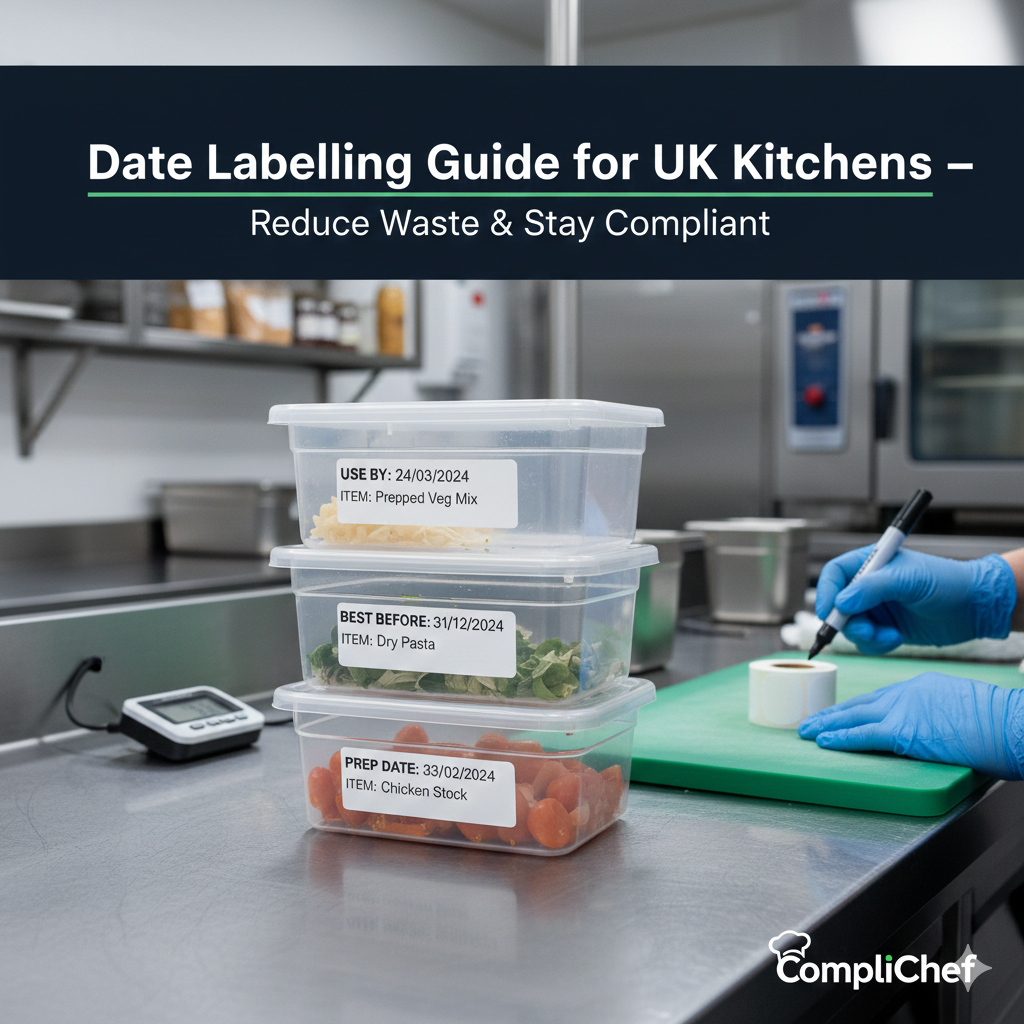
HACCP – FOOD INFORMATION LABEL
What Are the Main Types of Food Date Labels?
1. Use By Dates (Food Safety Critical)
A Use By date tells you the final day a food is safe to consume. Eating food past the Use By date can cause food poisoning, even if it looks and smells fine.
- Always follow Use By dates strictly.
- Foods past their Use By date must be disposed of immediately.
- Never relabel or extend Use By periods.
2. Best Before Dates (Quality, Not Safety)
A Best Before date relates to food quality rather than safety. Food may still be safe after this date, but texture, flavour, and appearance may decline.
3. Opened On / Prepared On Labels
These are essential for kitchens handling fresh produce, cooked foods, sauces, or repackaged items. EHO teams expect clear “opened on” or “prepared on” labels that link to your kitchen’s shelf-life rules.
4. Defrosted On Dates
Once defrosted, most foods must be used within 24 hours. You must label the “date defrosted” and ensure it aligns with your HACCP schedule.
How Long Can Foods Be Stored After Opening?
This depends on the food type. Key examples include:
- Cooked meats: 48–72 hours
- Fresh sauces: 24–48 hours
- Dairy (milk/cream): 24–48 hours after opening
- Smoked fish: 48 hours once opened
- Ready-to-eat deli items: 24–48 hours
These durations must match your HACCP plan—and this is where many kitchens get caught out during an EHO inspection.
Common Mistakes EHO Officers Report
- Missing or unclear “opened on” dates
- Relabelling food to extend shelf life
- Frozen items missing defrost dates
- Fridges containing expired products
- Using handwritten labels that rub off or fade
These issues can lead to major non-compliances, enforcement action, or even closure in severe cases.
How CompliChef (CCDFSM) Makes Date Labelling Fool-Proof
Traditional HACCP is useful—but still leaves room for human error. CCDFSM goes further, digitising every part of your date-labelling workflow:
- Digital date labels generated automatically based on your HACCP rules
- QR-coded labels linking product → staff → date/time → batch
- Smart shelf-life calculators that prevent incorrect dates
- Alerts before items expire to eliminate waste and EHO risk
- Automatic audit trails for every opened, prepped, or defrosted item
Every labelled item becomes part of a complete Digital Food Safety Management System, giving managers total visibility across all shifts—and giving EHO officers exactly what they want to see.
Why Correct Date Labelling Matters
Date labelling is not optional. It protects:
- Your customers from foodborne illness
- Your business from penalties or closures
- Your reputation from low hygiene ratings
- Your bottom line through reduced food waste
Ready to Modernise Your Date Labelling?
CompliChef transforms food safety from a daily headache into a streamlined, automated workflow.
Start a Free Demo