Running catering across a multi-academy trust is a different job from running one school kitchen. You're not just keeping one set of fridge records straight. You're trying to know, from one desk, that every kitchen in the trust is doing its checks, that allergen information is right in every school, and that you could prove all of it on any given day.
This guide is for the people choosing a system to do that: trust operations leads, catering managers and business managers. It covers what to look for, the questions worth asking any supplier, and what it should cost.
Why the choice matters more from September 2026
In July 2026 the Department for Education published statutory guidance, Allergy Safety in Schools, following Benedict's Law. From September 2026, maintained schools, academies and pupil referral units in England must have and publish an allergy safety policy and have regard to the guidance. It also expects staff to have allergy awareness training at least once a year.
For a trust, that turns allergen management from a kitchen task into something you need to evidence across every school. A food safety app is where much of that evidence lives: the allergen data behind each menu, the records showing checks were done, and the training records showing staff are up to date.
What to look for
1. One view across every school
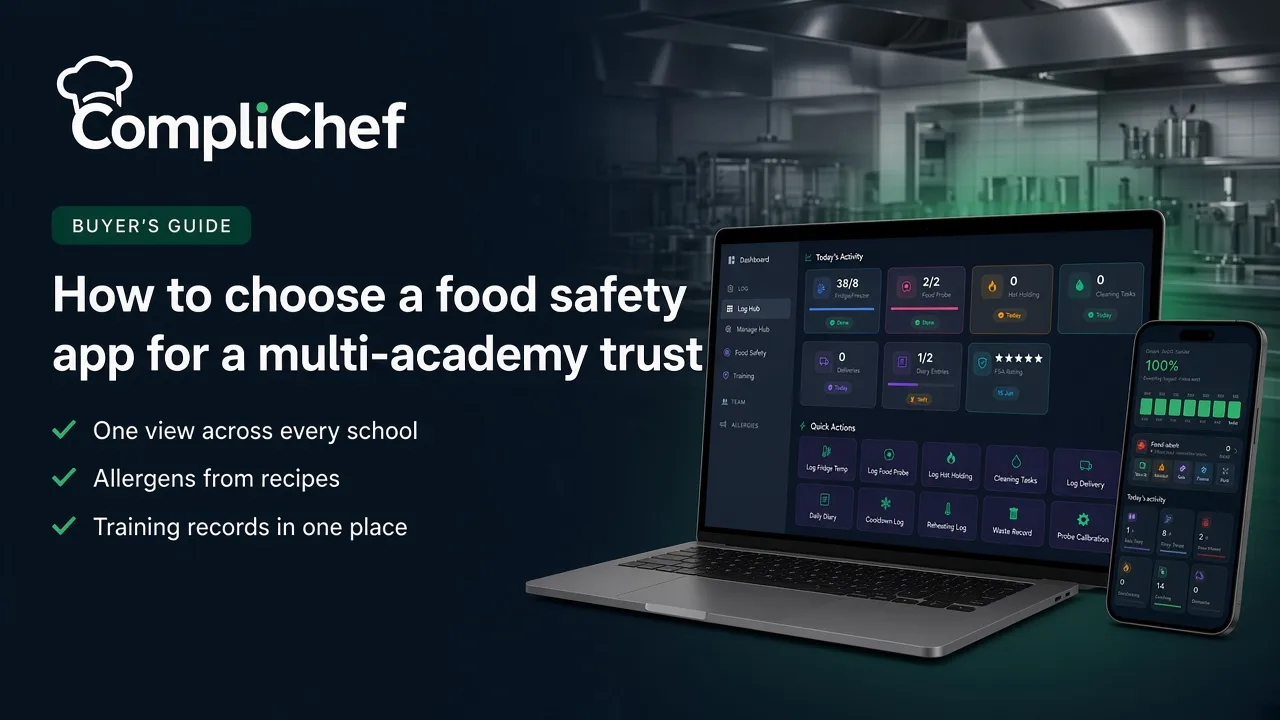
The single biggest difference between a trust and a single school is oversight. You want to open one dashboard and see which kitchens have completed today's checks and which haven't, without phoning round. Ask to see the multi-site view in a demo, not just a single kitchen.
2. Allergens that come from recipes, not spreadsheets
If allergen information is typed into a separate matrix, it drifts away from the real recipes the first time a supplier changes an ingredient. Look for a system where the allergens come from the recipe itself, so a change in one place updates the menu, the allergen sheet and any labels.
3. Records that stand up on their own
Every temperature, cleaning check and delivery should carry a time and the name of the person who recorded it. When something is out of range, the record should show what was done about it. That's what an inspector, an auditor or your own trust board will want to see.
4. Training records you can actually evidence
With annual allergy awareness training now expected, you need to see who has completed what, across every school. Check that training records sit alongside your food safety records rather than in yet another system.
5. Easy access for inspectors
An EHO visiting one of your kitchens shouldn't need someone to log in for them or dig through folders. A read-only access code that shows them the records they need, for a limited time, saves a lot of stress on the day.
6. Parent-facing allergen information
Some trusts want parents to see allergen-aware menus or order meals online. If that matters to you, check whether it can use the same allergen data the kitchen already keeps, so there's only one version of the truth.
7. Contracts, data and getting out
Trusts should always ask:
- Is there a minimum contract term?
- Who owns the data, and how do we get it back if we leave?
- Is there a data processing agreement in place?
- Can we trial it in one school before rolling it out?
Questions to ask any supplier
- Can I see every school's checks on one screen?
- If a recipe changes, what else updates automatically?
- How do staff record checks during a busy lunch service?
- How would an EHO see our records during a visit?
- How are allergy training records kept and reported?
- How is pricing worked out: per school, per user or per trust?
- What happens to our data if we cancel?
What should it cost?
Pricing in this market is set up in different ways: per site, per user or per trust. Per-user pricing can get expensive in schools, where catering teams change and cover staff come and go, so always ask what happens to the bill when your team grows.
For reference, here's how CompliChef prices it:
- One school kitchen: Multi-Staff Kitchen, £39 a month, with up to 15 staff.
- Up to 5 school kitchens: Professional Kitchen, £160 a month, with unlimited staff and every kitchen in one dashboard.
- Up to 10 school kitchens: Multi-Site, £715 a month, with unlimited staff and priority support.
- Larger trusts: we'll put a plan together with you.
There are no per-user charges, no setup fee and no contract, and paying yearly saves 10%. SchoolMenu Pro, our parent-facing menu and ordering add-on, is available to a small number of schools while we onboard each one personally.
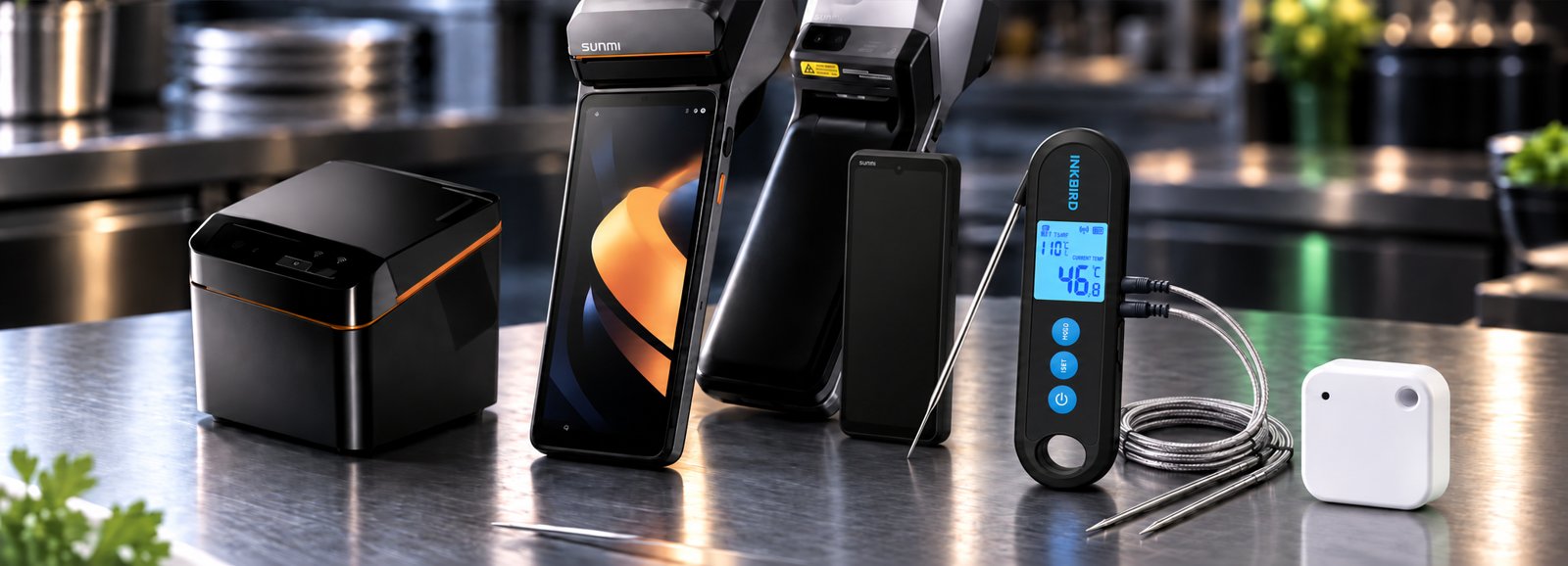
If you'd like a dedicated screen in each kitchen, the CompliChef Kitchen Station is £599, bought outright: an 11-inch Sunmi tablet in a protective case that arrives with CompliChef installed and set up for that kitchen.
The short version
Choose a system that gives you one view across the trust, takes allergens from the recipes, records who did what and when, and keeps training records in the same place. Then make sure the price doesn't rise every time you add a member of staff.
If you'd like to see how that works across several schools, book a 15-minute walkthrough, or read more about CompliChef for schools and our pricing.