The Clock Is Running: SALSA Issue 7 Is Already Live
If you hold SALSA certification — or you're working towards it — you need to know this: SALSA has published new issues of all four of its Standards, and they've been available to view on the SALSA website since 1 June 2026.
More importantly: from 1 September 2026, every single SALSA audit will be conducted against the new Issue 7 requirements. Not Issue 6. Not last year's paperwork. Issue 7.
That means if your renewal audit falls on or after that date — and for many producers it will — you'll be assessed against the new standard whether you've prepared for it or not. The preparation window is open right now. The question is whether you're using it.
Why New Standard Issues Catch Small Producers Out
You'd think moving from one issue of a standard to the next would be a minor tweak. In practice, new issues typically bring meaningful changes: reworded requirements, new clauses, updated expectations around documentation, and sometimes entirely new areas of focus.
Issue 6 in 2022 was a good example. Businesses that had sailed through audits for years suddenly found their existing systems didn't quite map onto the new requirements. Not because they'd gotten worse at food safety — but because the standard had moved and their paperwork hadn't.
Issue 7 is the same story. The gap between compliant under Issue 6 and compliant under Issue 7 is exactly where businesses get caught out. And it's a particularly uncomfortable place to discover a gap: sat in front of an auditor who's working from a checklist you haven't fully read yet.
We're not trying to alarm you. But we are being straight with you: 1 September 2026 is not a soft deadline.
The Old Way of Preparing for a New Standard Issue
You probably know the drill. Someone downloads the new standard. It gets printed — all however-many pages of it. Out comes the highlighter. You go through it section by section, then go back through your existing procedures and documents trying to cross-reference what you have against what the standard now asks for.
For a small bakery or artisan producer running a busy production schedule, that's easily a day or two of work, and that's before you've actually fixed anything. And there's always the nagging feeling that you've missed something — a clause buried on page 34 that relates to something you last updated three years ago.
It works, eventually. But it's slow, it's stressful, and it relies entirely on you not missing anything. Which, when you're also managing deliveries, production, and a team of two, is a big ask.
A Smarter Way: The CompliChef SALSA Readiness Dashboard
This is where CompliChef can take a significant weight off your shoulders.
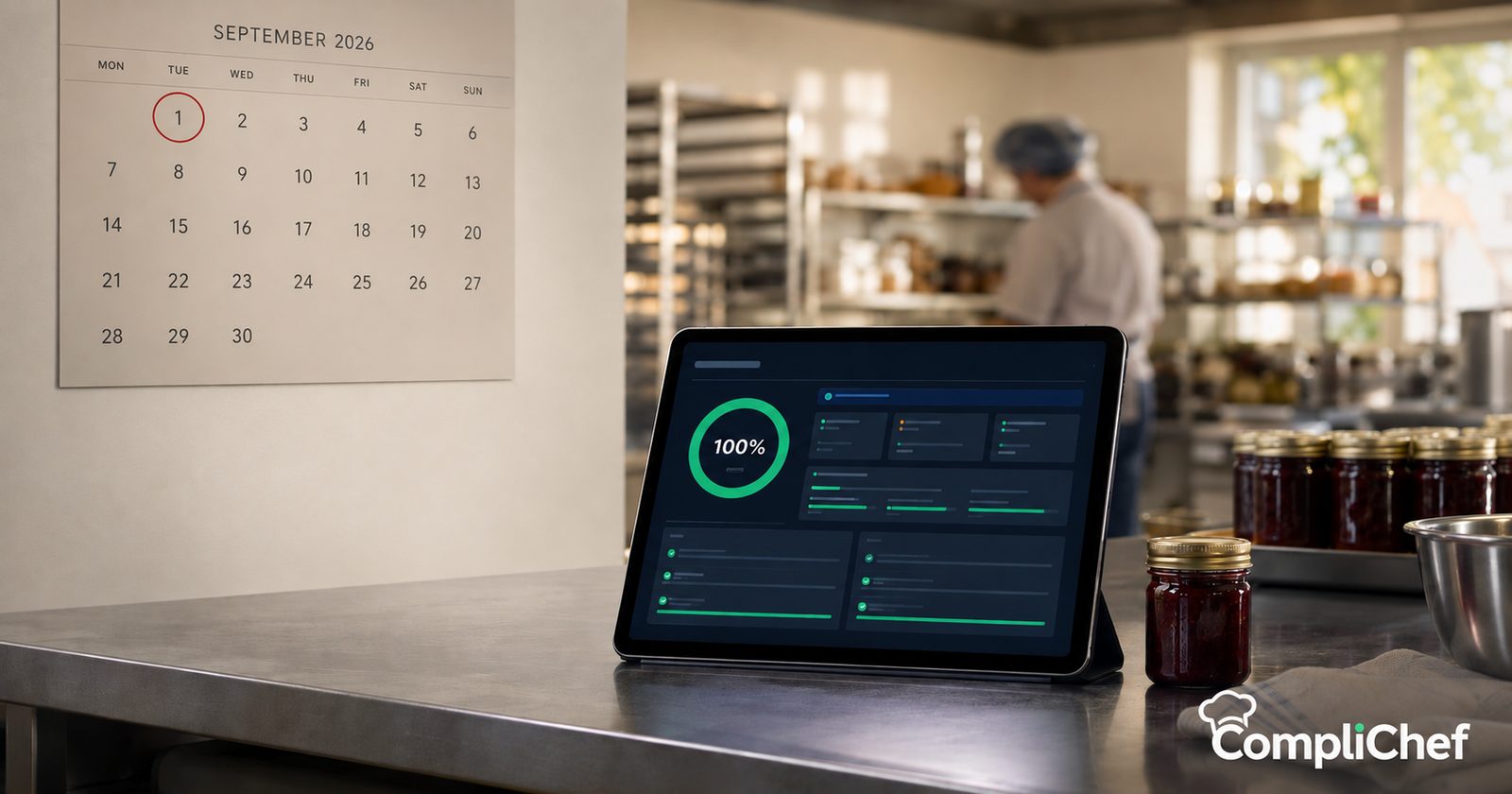
The CompliChef SALSA Readiness Dashboard is designed specifically for this problem. Rather than asking you to manually cross-reference your documents against the standard, it does the mapping for you — live, against your actual data.
Here's how it works in practice:
- Your existing CompliChef records — your HACCP logs, temperature monitoring records, cleaning schedules, allergen management documentation, traceability records, staff training logs, and supplier records — are already sitting in the platform.
- The dashboard maps those records against the SALSA requirements and generates a readiness score: a clear, plain-English view of what's covered and what's outstanding.
- Instead of guessing, you get a prioritised list of gaps. Not a vague sense of unease — an actual to-do list.
That means you can see exactly where you stand today, work through the outstanding items at a pace that suits your production schedule, and arrive at your audit knowing you've covered the ground — not hoping you have.
Important note: CompliChef is an independent compliance platform and is not affiliated with or endorsed by SALSA. The Readiness Dashboard is a practical tool to help you prepare — it's always worth reading the official standard in full on salsafood.co.uk and discussing any specific questions with your SALSA mentor or auditor.
Your Practical Pre-September Checklist
Here's the short version of what you should be doing right now:
1. Read the Issue 7 standard
All four new issues are available on the SALSA website at salsafood.co.uk. Download them, read them — particularly any areas your previous audits flagged as borderline. Don't rely on summaries or second-hand accounts of what's changed. Go to the source.
2. Run your readiness check in CompliChef
Log in and pull up your SALSA Readiness Dashboard. Look at your score honestly. If you're not yet a CompliChef user, now is a good time to book a demo — you'll want to see the dashboard against real data, not a blank template.
3. Close the gaps one by one
Don't try to fix everything in a weekend. Work through the outstanding items systematically. Update procedures where the standard has moved. Create new records where they're now required. Brief your team on any changes to day-to-day practice.
4. Book your audit with confidence
With your gaps closed and your documentation in order, book your audit knowing you've prepared properly. No nasty surprises, no scrambling the week before.
Don't Leave It to August
The window between now and 1 September 2026 is genuinely useful — but only if you use it. Businesses that start preparing in June and July will be in a very different position to those who finally sit down with the new standard in the last week of August.
You've worked hard to earn your SALSA certification. It's worth protecting it with proper preparation, not a last-minute hope that nothing much has changed.
See where you stand today. Book a free demo at complichef.co.uk and we'll walk you through the SALSA Readiness Dashboard using your own kitchen's data — so you can see exactly what needs doing before September.