Natasha's Law labels,
straight from your recipes.
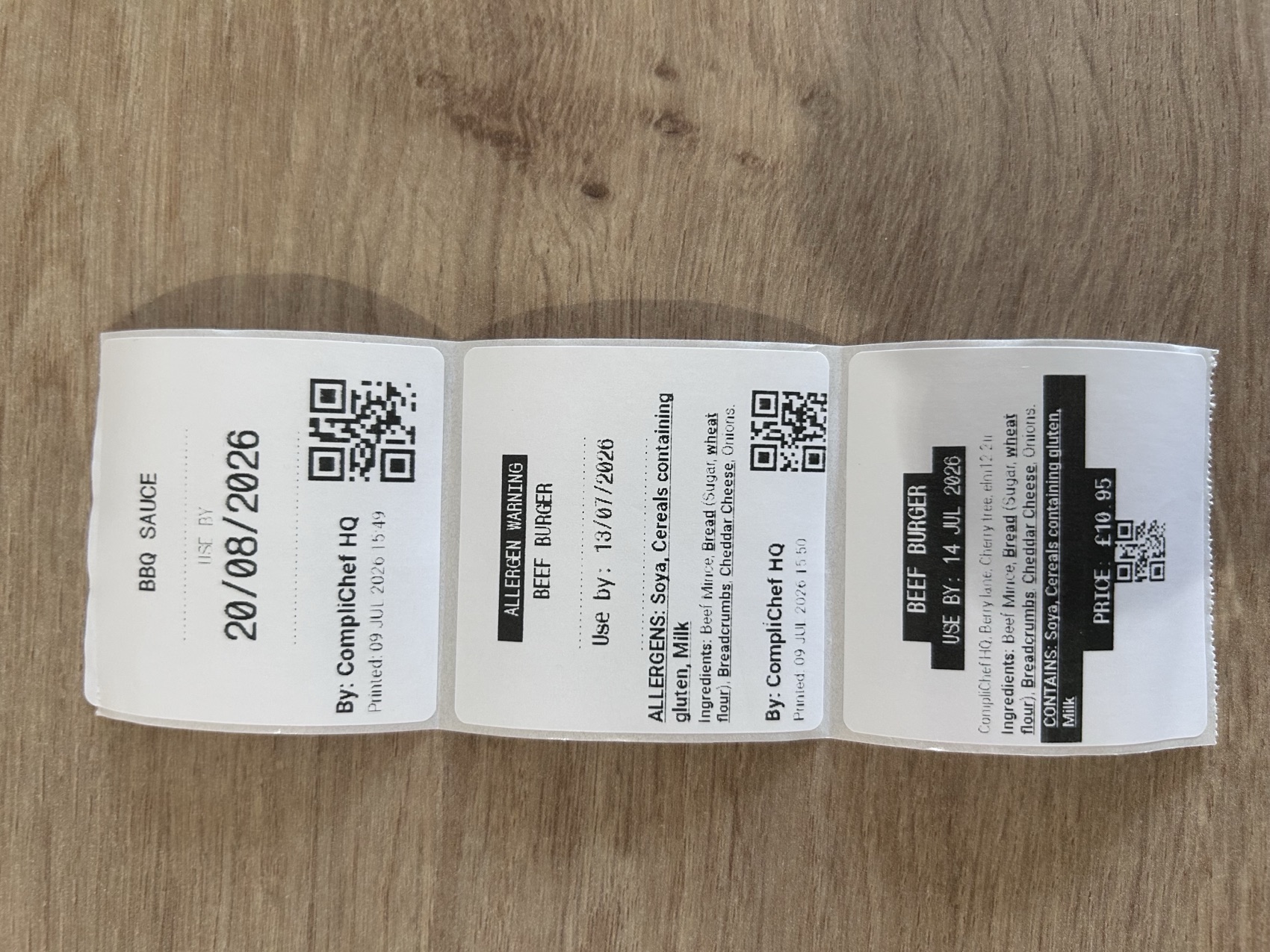
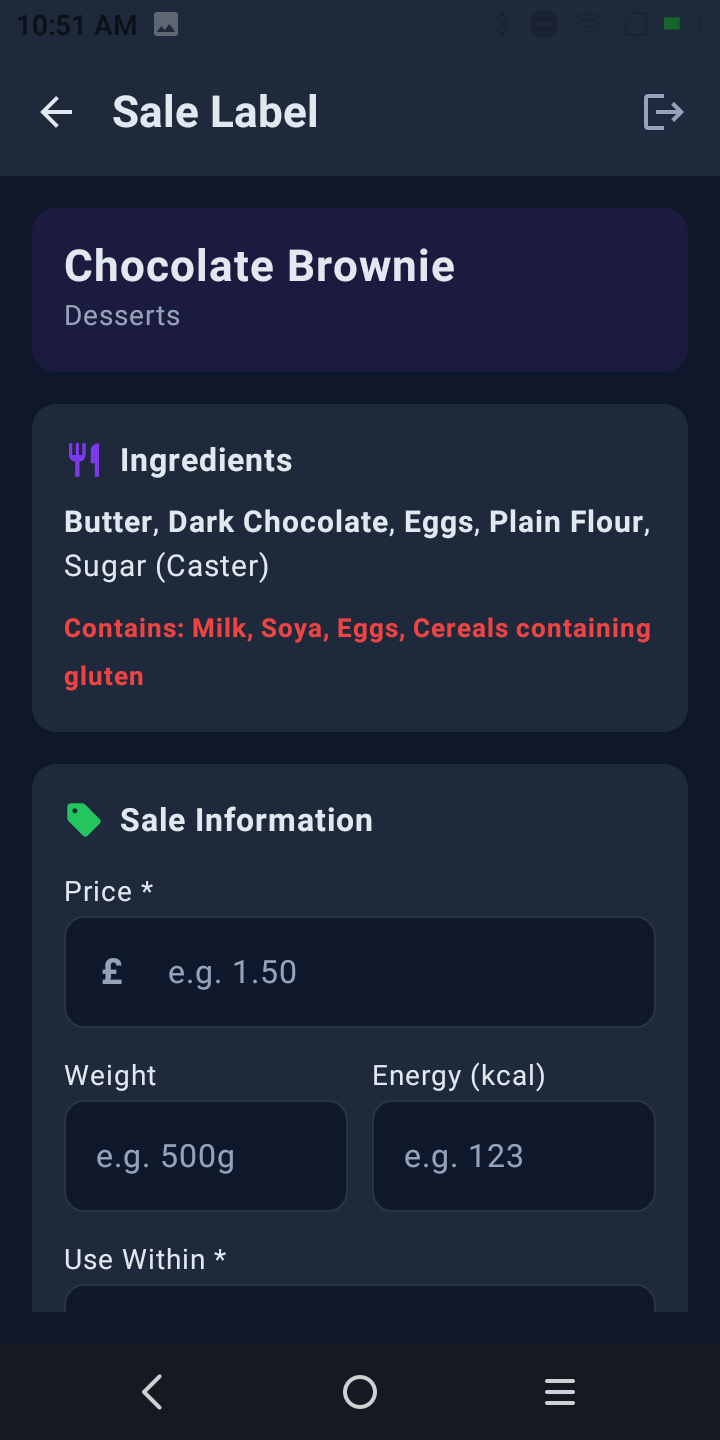
Print PPDS sale labels with the food name and full ingredients list, allergens in bold, in a few taps. The ingredients come from the recipes you've already built in KitchenPortal, so nobody types them out again.
- Full ingredients list filled in from the recipe
- All 14 allergens emphasised in bold
- Use-by date, price and weight on the same label
- Change a recipe once and every new label follows
What is Natasha's Law?
The Food Information (Amendment) (England) Regulations 2019, in force since 1 October 2021. Wales, Scotland and Northern Ireland have matching rules.
Food pre-packed for direct sale must show
- The name of the food
- A full list of ingredients
- The 14 major allergens emphasised within that list, for example in bold
CompliChef sale labels also carry a use-by date, your site address and, if you add them, price, weight and energy.
The 14 allergens
Who it applies to
Any food business that packs food on site before the customer orders it, whatever its size.
Cafés & coffee shops
Sandwiches, cakes and pastries boxed or wrapped for the counter.
Bakeries & delis
Bread, pastries, salads and prepared items packed for sale.
Restaurants & takeaways
Grab-and-go items, boxed meals and packed desserts.
This is a summary, not legal advice. For full guidance, see the Food Standards Agency's PPDS allergen labelling guidance.
Enter the recipe once. Print the label forever.
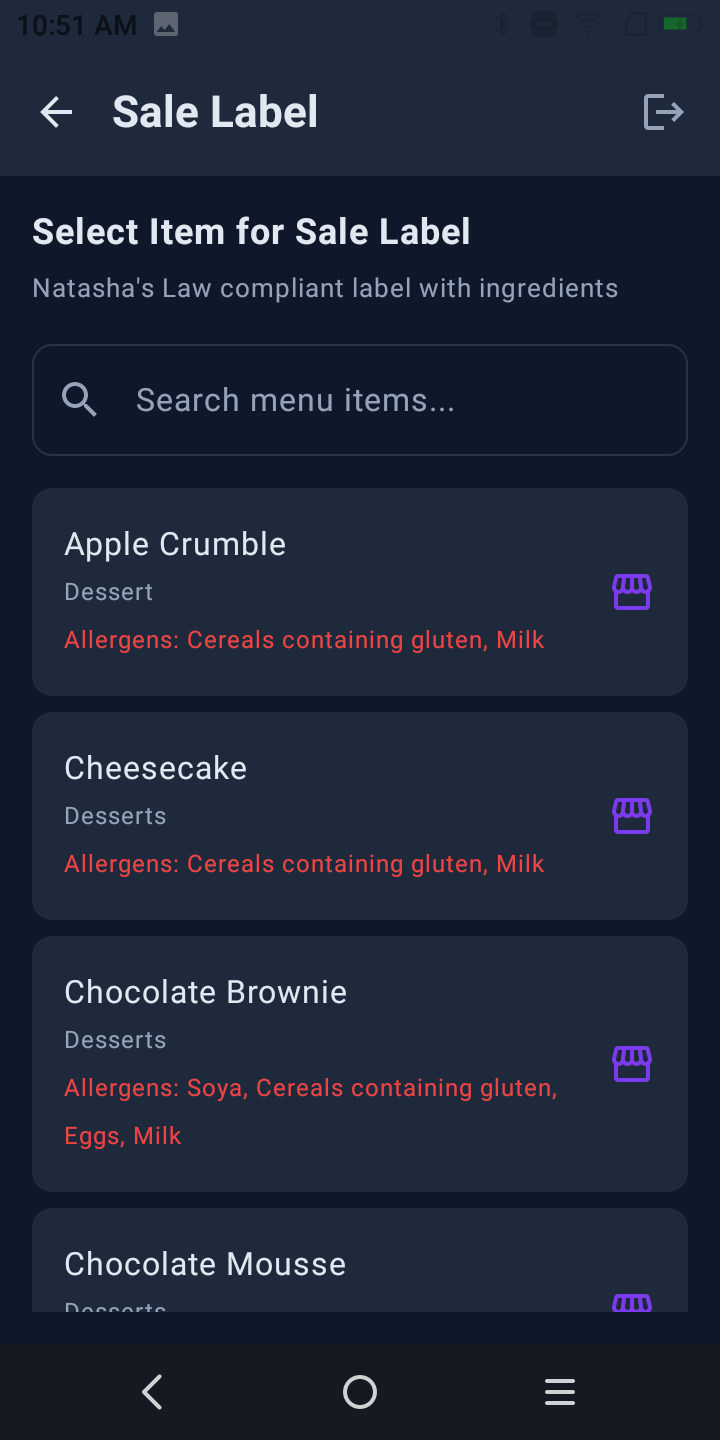
Most kitchens type ingredients and allergens onto each label, and that's where mistakes creep in. CompliChef Labels takes them from your KitchenPortal recipe instead.
- Build each recipe once in KitchenPortal
- Ingredients and allergens are saved with the recipe
- Pick the dish on the printer and the label fills itself in
- Change an ingredient and every new label reflects it
- Sub-recipes bring their allergens with them
You stay in control of the information
CompliChef prints the label in the format the regulations set out, using the ingredient and allergen information you enter. Keeping that information complete and accurate, including supplier changes, stays your responsibility.
Where hand-written labels go wrong.
A hand-written label can meet the law, but only if it's right every single time, on every item, whoever's on shift.
Easy to get wrong
Allergens get missed or misspelled, and ingredient lists end up incomplete or out of date.
Slow
Writing out a full ingredients list takes minutes per item, and that adds up across a day.
Inconsistent
Different staff write labels differently, so Monday's batch never quite matches Tuesday's.
No record
A hand label leaves no trace of who wrote it or when, so it's hard to show how you manage allergens.
Recipes change
Swap a supplier or an ingredient and every written label, sheet and sign has to be updated by hand.
Hard to read
Small handwriting and smudged ink make the allergens hard for customers to spot.
Printers from £100, with a plan from £39 a month
Choose the £310 Sunmi V3 handheld or the £100 Sunmi Cloud Printer, both bought outright. No CompliChef plan? Solo Labels gives you the V3 with its own dashboard for £30 a month.
Natasha's Law questions.
1 What is Natasha's Law?
Natasha's Law is the name for The Food Information (Amendment) (England) Regulations 2019, in force since 1 October 2021. It says food that is pre-packed for direct sale (PPDS) must carry the name of the food and a full ingredients list, with the 14 major allergens emphasised. Wales, Scotland and Northern Ireland brought in matching rules at the same time.
2 What counts as PPDS?
Pre-packed for direct sale means food that is packed on the same premises it's sold from, before the customer orders it. Think a boxed sandwich in the chiller, a wrapped cake on the counter or a pot of salad in the fridge. Food made to order and served straight away, like a meal on a plate, isn't PPDS.
3 Does it apply to small businesses?
Yes. It applies to any food business selling PPDS food, whatever its size, from a single café to a chain.
4 Which allergens have to be emphasised?
The 14 major allergens: cereals containing gluten, crustaceans, eggs, fish, peanuts, soya, milk, tree nuts, celery, mustard, sesame, sulphur dioxide and sulphites, lupin, and molluscs. Where they appear in the ingredients list they need to stand out, for example in bold.
5 Are CompliChef sale labels Natasha's Law compliant?
Sale labels print the name of the food and the full ingredients list with allergens in bold, which is the format the regulations require. Whether each label is correct depends on the ingredient information behind it, which comes from your recipes, and you stay responsible for that being complete and accurate.
6 Do I have to type allergens on every label?
Not with CompliChef Labels and a CompliChef plan. You enter each recipe once in KitchenPortal and every sale label for that dish uses it. Change an ingredient and every label printed after that picks up the change.
7 Can I use it without KitchenPortal?
Yes, with Solo Labels. You buy the same £310 printer and pay £30 a month for its own dashboard and 500 labels. You enter each item's ingredients on the device instead of pulling them from recipes.
8 What hardware do I need?
A Sunmi V3 label printer, bought outright for £310, or a £100 Sunmi Cloud Printer that prints from the Kitchen Portal app on your own phone or tablet. Both need an active CompliChef plan, from £39 a month.
PPDS labels, sorted this week.
Try CompliChef free for 14 days. Nothing is charged during the trial and you can cancel any time.