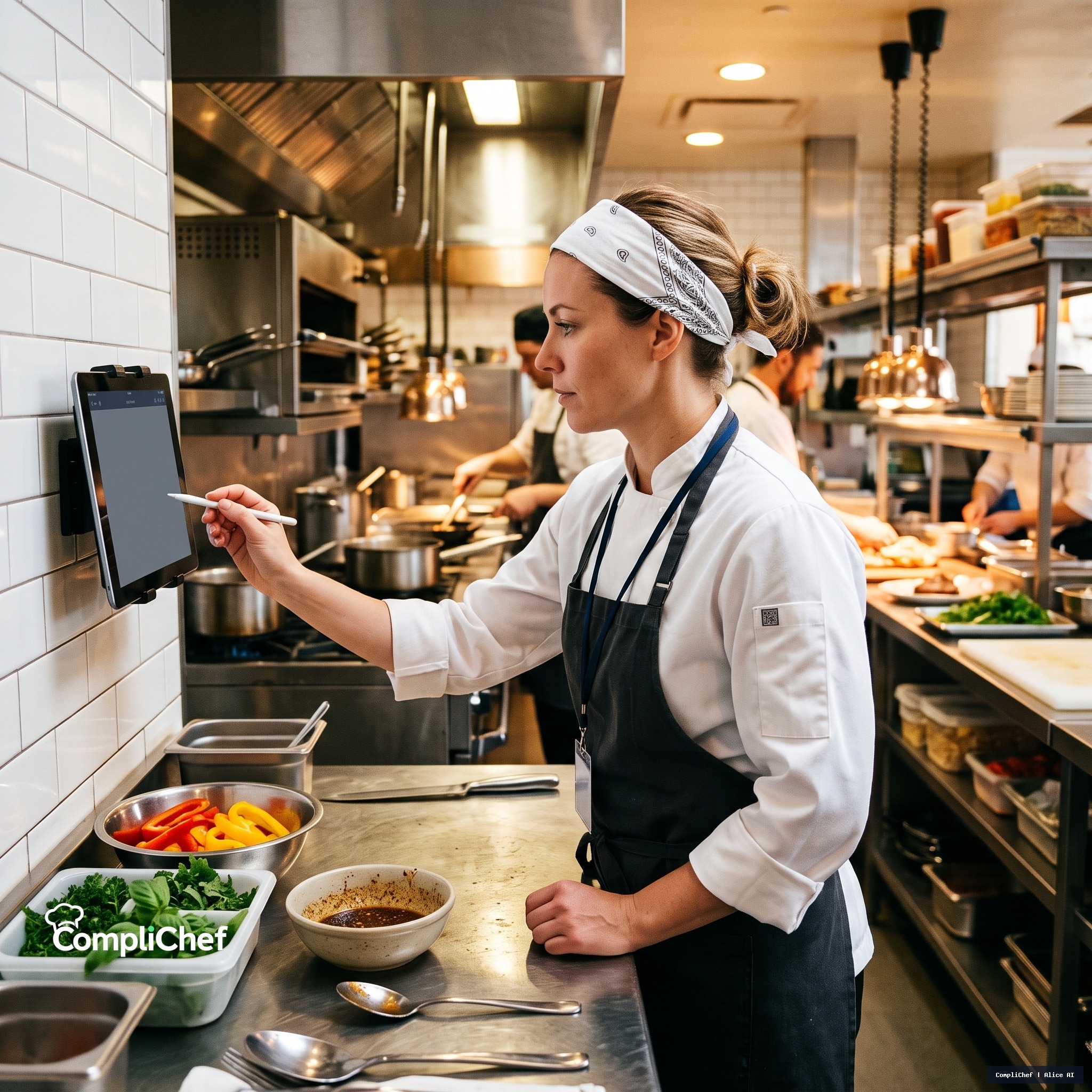
What Is a Digital Food Safety Management System?
A digital food safety management system (FSMS) is a software-based platform that replaces paper checklists, handwritten temperature logs, and lever-arch folders with a centralised, cloud-based solution. For UK hospitality businesses — from independent cafés to multi-site restaurant groups — it means having every compliance record, HACCP plan, and audit trail accessible at the touch of a button.
Under the Food Safety Act 1990 and the Food Hygiene Regulations 2006, food business operators in the UK are legally required to implement and maintain a food safety management system based on HACCP principles. A digital FSMS doesn't just help you meet that obligation — it makes it significantly easier, more reliable, and more defensible in the event of an inspection or incident.
Why Paper-Based Systems Are Letting You Down
Many kitchens still rely on paper. It's familiar, and it feels manageable — until it isn't. Here's why paper-based food safety management is increasingly risky:
- Lost or illegible records — handwritten logs get wet, torn, or simply disappear
- Inconsistent completion — busy staff skip checks or fill them in retrospectively
- No real-time visibility — managers can't spot a missed fridge check until the next day
- Audit stress — scrambling for records during an Environmental Health Officer (EHO) visit is avoidable
- No trend analysis — paper gives you data, but no insight
If your Food Standards Agency (FSA) rating matters — and it should — moving to a digital system is one of the most impactful changes you can make.
Key Features to Look for in a Digital FSMS
Not all food safety software is created equal. When evaluating a digital food safety management system for your hospitality business, look for these essential features:
1. Digital Temperature Monitoring
Automated or manual temperature logging for fridges, freezers, and hot-holding equipment. Alerts should flag out-of-range readings immediately, not hours later.
2. Digital HACCP Plans
A good system will include pre-built HACCP templates tailored to UK food law, with the ability to customise for your menu and processes. Your critical control points (CCPs) should be clearly mapped and documented.
3. Cleaning Schedules and Checklists
Digital cleaning schedules with staff sign-off create a clear, timestamped record of every task completed — exactly what EHOs want to see.
4. Supplier and Allergen Management
Track supplier information, delivery records, and allergen data in one place. With Natasha's Law now fully in force, accurate allergen records are not optional.
5. Staff Training Records
Document food hygiene training, track certificate expiry dates, and ensure every team member is compliant — particularly important when onboarding new staff.
6. Audit-Ready Reporting
At the click of a button, generate compliance reports that demonstrate your due diligence to EHOs, insurers, or senior management.
7. Multi-Site Management
For growing hospitality groups, the ability to oversee compliance across multiple sites from a single dashboard is invaluable.
How a Digital FSMS Improves Your Food Hygiene Rating
The FSA's Food Hygiene Rating Scheme (FHRS) scores businesses on three areas: food hygiene practices, structural compliance, and — crucially — confidence in management. That third pillar is where a digital FSMS makes a dramatic difference.
When an EHO visits and you can instantly pull up six months of temperature records, completed cleaning schedules, allergen documentation, and signed staff training logs, you are demonstrating exactly the kind of proactive, organised food safety culture that earns top ratings.
Businesses using digital food safety systems consistently report:
- Greater confidence during unannounced inspections
- Faster resolution of any non-conformances identified
- Improved team accountability and engagement with food safety
- Fewer near-misses and incidents
Is a Digital Food Safety System Right for Your Business?
Whether you run a single-site pub kitchen, a catering company, or a growing restaurant group, the answer is almost certainly yes. Here's a quick checklist to assess your current situation:
- ☐ Do you struggle to locate records quickly during inspections?
- ☐ Are temperature checks missed more often than you'd like?
- ☐ Is allergen information scattered across multiple documents?
- ☐ Do you have little visibility of what's happening across your kitchen?
- ☐ Is staff training documentation out of date or incomplete?
If you ticked even one of those boxes, a digital FSMS will deliver an immediate return — in reduced risk, reduced stress, and reduced time spent on admin.
Making the Switch: What to Expect
Transitioning from paper to digital food safety management doesn't have to be disruptive. The best platforms are designed with busy kitchen teams in mind — intuitive interfaces, mobile-friendly design, and straightforward onboarding.
A typical implementation looks like this:
- Set-up — configure your business profile, sites, equipment, and menu items
- HACCP build — create or import your HACCP plan with expert support
- Staff training — brief your team on using the app (usually 30 minutes or less)
- Go live — begin logging checks digitally from day one
- Review — use the reporting dashboard to spot trends and address gaps
CompliChef: Built for UK Hospitality
At CompliChef, we've built our digital food safety management platform specifically for the realities of UK hospitality — the pace, the pressure, and the regulatory environment. From HACCP plans aligned with UK food law to real-time temperature alerts and allergen tracking, everything your business needs to stay compliant is in one place.
We help you move away from the anxiety of paper-based compliance and towards a system that works as hard as your kitchen team does.
Ready to see what a digital FSMS can do for your business? Book a free demo with CompliChef today and take the first step towards stress-free food safety compliance.