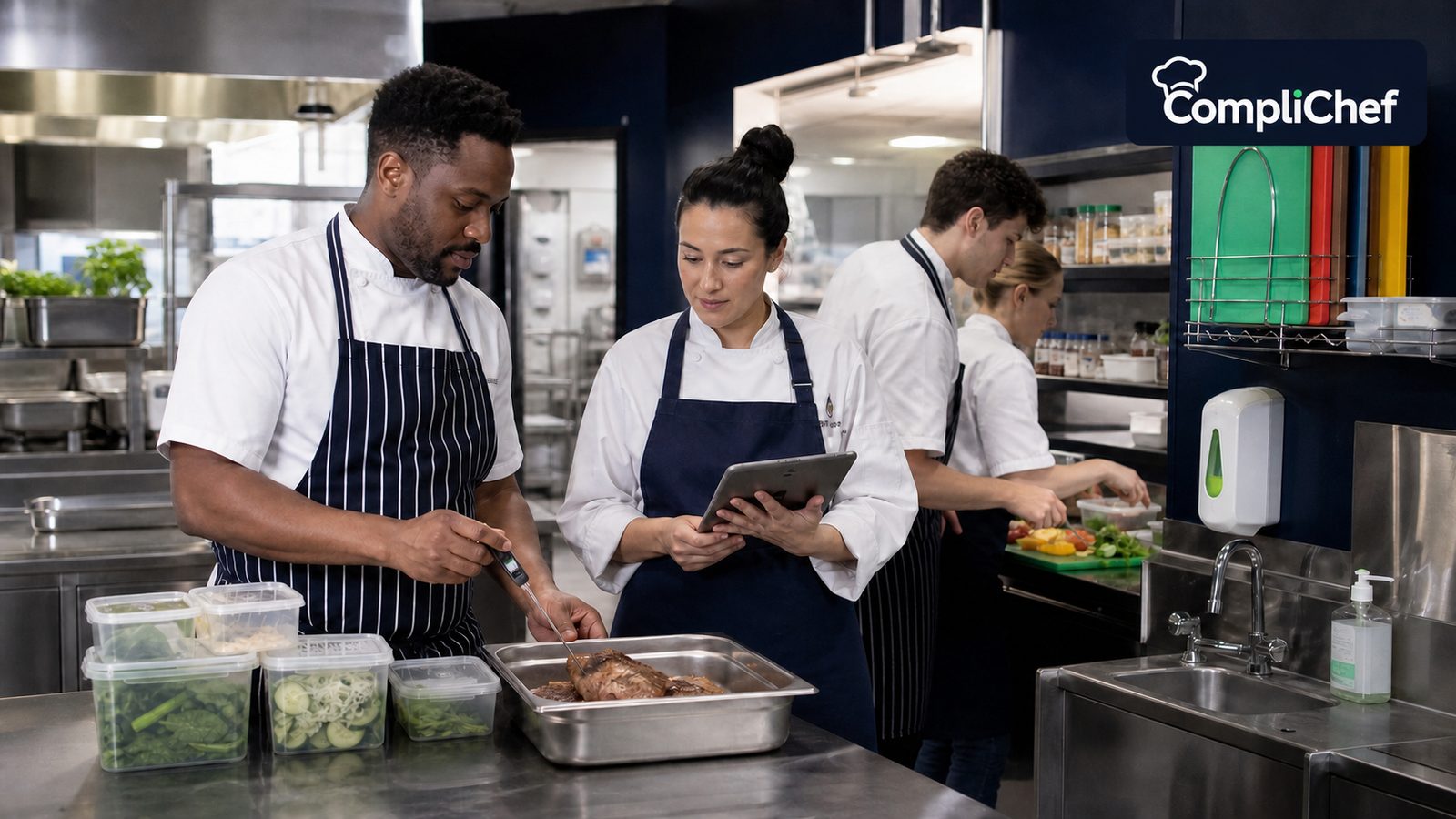
What to Expect During an EHO Inspection
An unannounced knock from an Environmental Health Officer (EHO) can set any food business owner's nerves on edge — but it doesn't have to. Understanding exactly what inspectors look for means you can run your kitchen with confidence every single day, not just when you think someone might be watching.
Environmental Health Officers work for your local authority and have the legal power to inspect any registered food business at any time, without prior notice. Their findings directly influence your Food Hygiene Rating Scheme (FHRS) score — that all-important number displayed in your window and on the FSA website. A low score can damage your reputation and, in serious cases, result in enforcement action.
This EHO inspection checklist breaks down the key areas officers assess so you always know where you stand.
The Three Pillars of an EHO Inspection
EHOs in England, Wales, and Northern Ireland assess food businesses across three broad areas, each contributing to your overall hygiene rating:
- Hygienic food handling — how food is prepared, cooked, cooled, and stored
- Cleanliness and condition of facilities — the physical state of your premises and equipment
- Food safety management system — your documented procedures and records (often referred to as HACCP)
Scotland uses the Food Hygiene Information Scheme, with Pass, Improvement Required and Exempt Premises outcomes rather than the 0–5 FHRS rating, but inspectors assess similar criteria.
EHO Inspection Checklist: Key Areas Covered
1. Food Handling and Temperature Control
This is one of the most heavily scrutinised areas. Inspectors will check:
- Fridge and freezer temperatures — fridges should operate at or below 8°C (ideally 1–4°C); freezers at -18°C or below
- Cooking temperatures — evidence that food reaches a safe core temperature for long enough (for example, 70°C for 2 minutes or 75°C for 30 seconds)
- Hot holding — food kept hot for service must be held at 63°C or above
- Cooling procedures — cooked food should be cooled quickly and refrigerated within 90 minutes
- Defrosting practices — food should be defrosted safely, typically in a fridge or under cold running water
- Cross-contamination controls — separation of raw and ready-to-eat foods, use of colour-coded equipment, and hand-washing practices
Practical tip: Keep a temperature log and check it daily. Gaps in records immediately raise red flags for inspectors.
2. Cleanliness and Condition of Premises
Inspectors will do a thorough walk of your entire premises — not just the kitchen. Expect them to look at:
- General cleanliness — surfaces, floors, walls, ceilings, and behind/underneath equipment
- Equipment condition — no damaged chopping boards, cracked containers, or worn seals that harbour bacteria
- Pest control — evidence of pests (droppings, gnaw marks, live sightings) is a serious concern; inspectors will want to see effective pest-control procedures and records
- Waste management — bins should be lidded, regularly emptied, and kept away from food preparation areas
- Ventilation and lighting — adequate ventilation reduces condensation and grease build-up; good lighting allows effective cleaning
- Handwashing facilities — dedicated hand-wash basins with hot and cold water, soap, and paper towels must be accessible in food prep areas
- Staff facilities — clean changing areas and toilets that don't open directly into food rooms
3. Food Safety Management System (HACCP)
This is the paperwork element, and it matters enormously. A robust food safety management system demonstrates that you've identified risks and put controls in place. Inspectors will want to see:
- A documented HACCP plan (Hazard Analysis and Critical Control Points) appropriate for your type of business
- Temperature records — fridge checks, cooking probes, and hot-holding logs
- Cleaning schedules — a written schedule signed off each time tasks are completed
- Supplier records — evidence that you're buying from reputable, approved suppliers
- Traceability records — date labels, delivery notes, and stock rotation procedures (FIFO — first in, first out)
- Staff training records — proof that all food handlers have received appropriate food hygiene training
- Allergen management documentation — written records of allergen controls and information provided to customers
- Opening and closing checks — documented daily checks that show consistent management
Practical tip: If your records are incomplete or missing, even a spotlessly clean kitchen may receive a lower rating. Documentation is evidence of consistent compliance, not just compliance on inspection day.
Allergen Controls: An Increasingly Critical Area
Since Natasha's Law came into force in October 2021, allergen labelling and management have become a major focus for EHOs. Inspectors will check:
- That all 14 major allergens are accounted for in your menu and recipes
- That staff can confidently answer customer allergen queries
- That allergen information is accurate, up to date, and accessible
- Written procedures are in place to prevent cross-contact
Failing on allergens isn't just a rating issue — it's a serious public safety and legal matter.
What Happens After the Inspection?
Following the visit, the EHO will compile their findings. If no significant issues are found, you'll receive your updated FHRS rating — ideally a 5. If problems are identified, you may receive:
- Verbal advice — informal guidance on minor issues
- Written improvement notices — formal requests to address specific problems within a set timeframe
- Hygiene improvement notices — a legal notice requiring action; failure to comply can result in prosecution
- Hygiene emergency prohibition notices — issued when there is an imminent risk to public health; these can close your business immediately
You have the right to request a re-inspection once improvements have been made, though there may be a fee depending on your local authority.
How to Stay Inspection-Ready Every Day
The businesses that consistently score 5 treat every day as inspection day. Here's how:
- Conduct regular internal audits using your own EHO-style checklist
- Maintain up-to-date digital records that are easy to locate and present
- Train all staff — not just managers — on food hygiene fundamentals
- Review and update your HACCP whenever your menu, processes, or team change
- Act on issues immediately rather than waiting for the next inspection
CompliChef makes this straightforward with digital checklists, automated temperature logs, and HACCP templates built specifically for UK hospitality businesses.
Final Thoughts
A thorough EHO inspection checklist isn't just a tool for passing inspections — it's a framework for running a safer, more professional food business. The best operators don't fear EHO visits; they welcome them as validation of the high standards they already maintain.
Get your compliance in order before the inspector knocks, and a 5-star rating becomes the natural result of how you operate every day.