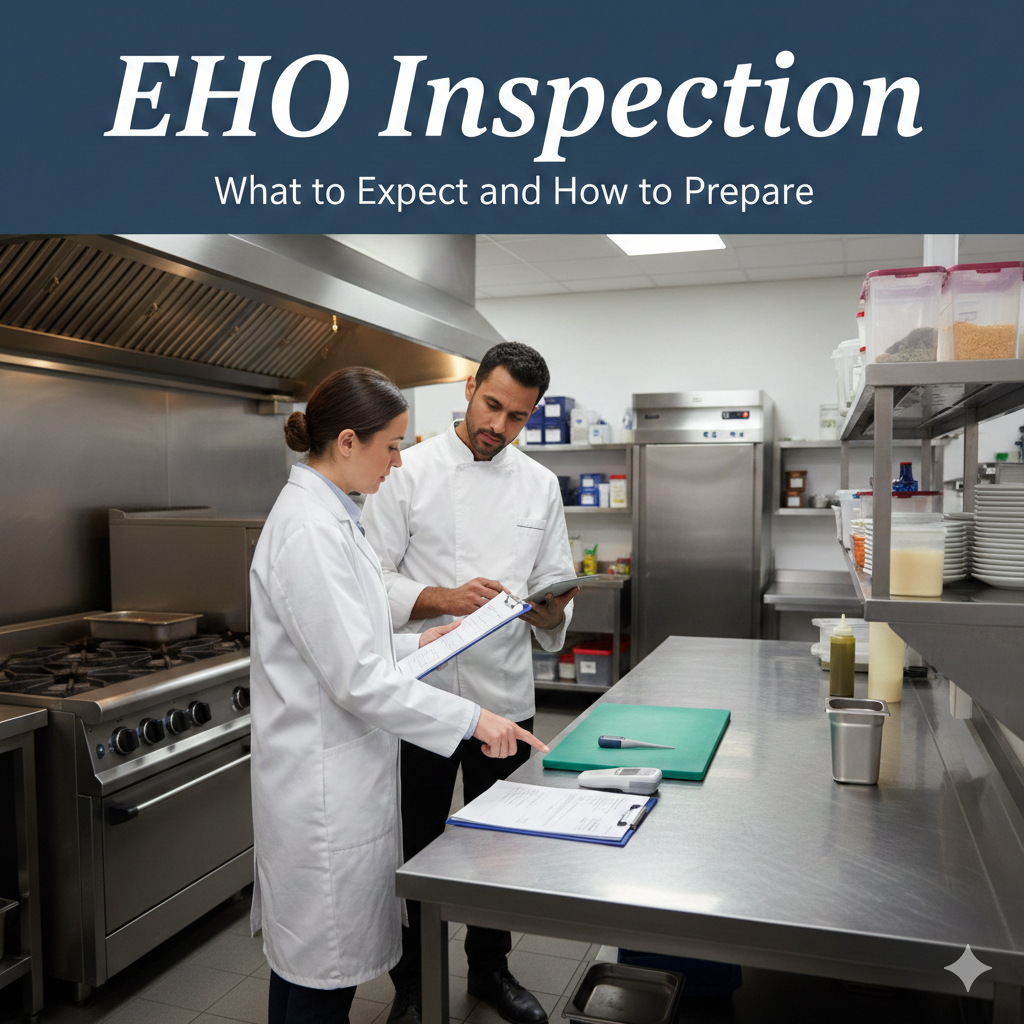
What is an EHO inspection?
An Environmental Health Officer (EHO) is a council employee authorised to inspect food businesses under the Food Safety Act 1990 and associated regulations. Their job is to assess whether your food business is operating safely and legally.
EHO inspections are unannounced — you won't get advance notice (although in some circumstances local authorities may contact businesses to arrange access). This is by design: the purpose is to see your kitchen as it normally operates, not prepared for a show inspection.
When will I be inspected?
The frequency of inspections depends on your Food Hygiene Rating Scheme (FHRS) score — the 0 to 5 rating displayed in your business window and on the FSA website.
- Rating 5 (Very Good): Inspections every 3–5 years
- Rating 4 (Good): Inspections every 18 months–3 years
- Rating 3 (Generally Satisfactory): Inspections every 12–24 months
- Rating 2 (Improvement Necessary): Inspections within 6–12 months
- Rating 1 (Major Improvement Necessary): Inspections within 3–6 months
- Rating 0 (Urgent Improvement Necessary): Inspections within 1–3 months
New food businesses are typically inspected within the first few months of opening.
What do EHOs look for?
EHO inspections cover three main areas, each scored separately:
1. Hygienic handling of food
- Food preparation processes (cooking, cooling, reheating)
- Cross-contamination control
- Allergen management
- Personal hygiene of food handlers
- Temperature control during preparation and service
2. Condition of the premises and equipment
- Cleanliness of all areas (including behind equipment)
- State of repair — damaged surfaces, broken tiles, pest entry points
- Ventilation and lighting
- Handwashing facilities (soap, hot water, paper towels)
- Pest control evidence
3. Food safety management system
This is where your paperwork — or digital records — comes in. EHOs will look for:
- Temperature records (fridge, freezer, cooking, hot holding)
- Cleaning schedules and checklists
- Allergen information for all food
- HACCP plan or equivalent (e.g. Safer Food Better Business / SFBB)
- Staff training records
- Supplier information
- Evidence of corrective actions when problems were identified
How your rating is calculated
Your Food Hygiene Rating (0–5) is based on the lowest scoring of the three areas above — not an average. This means you can score perfectly on food handling and premises but still get a low rating if your food safety management system is inadequate.
This is why documentation matters. You can be running a spotless kitchen with excellent food handling practices, but if you can't demonstrate it with records, your rating will suffer.
What happens during the inspection?
A typical EHO inspection follows this pattern:
- Introduction — The EHO identifies themselves and shows ID
- Discussion — They may ask about your food safety management approach
- Kitchen walk-through — Checking premises, equipment and storage
- Records review — Examining your temperature logs, cleaning checklists, CCDFSM/SFBB, allergen records
- Staff observation — Watching food handlers at work
- Feedback — The EHO will summarise their findings verbally
- Written report — You'll receive a formal report with any improvement actions
Common reasons for low ratings
Based on FSA data, the most common issues leading to low hygiene ratings include:
- Inadequate or missing temperature records
- No formal allergen management system
- Incomplete or missing SFBB/CCDFSM documentation
- Poor pest control evidence
- Cross-contamination risks (colour-coded board system not used, raw/cooked food stored together)
- No evidence of staff food hygiene training
- Out-of-date or inaccurate records
How to prepare (without faking it)
The best way to prepare for an EHO inspection is simply to run your kitchen the right way, every day. EHOs can generally tell the difference between genuine compliance and last-minute preparation.
That said, there are things you can do:
Keep records daily — not weekly
Your temperature logs should be completed at the time of the check, every day. Not filled in on Friday for the whole week. Digital systems with timestamps make this automatic — the record exists when it was made, and it can't be backdated.
Have your CCDFSM/SFBB properly completed
Every section of your food safety management system should be filled in and up to date. Your KitchenPortal CCDFSM gives you a live compliance score — if it's not 100%, there are outstanding sections to complete.
Know your allergens
Be able to tell the EHO what allergens are in every dish you serve. Have your allergen matrix available and up to date.
Check your premises regularly
Do your own walk-through every week. Look for pest entry points, damaged surfaces, equipment in disrepair. Fix issues before they become EHO problems.
Sharing records with your EHO digitally
One of the biggest improvements you can make to your inspection experience is moving to digital records. With CompliChef KitchenPortal:
- Generate a secure EHO access code from your dashboard
- Email it to your EHO officer — or hand them a device to view it on
- They get read-only access to all your compliance records
- No printing, no ring binders, no lost paperwork
EHOs increasingly expect businesses to have digital systems. It demonstrates professionalism and makes the inspection process significantly faster.
*Get your kitchen EHO-ready with CompliChef KitchenPortal. [Start your free trial](https://portal.complichef.co.uk/signup.php) — no credit card required.*