The problem with paper
Walk into the back of almost any UK kitchen and you'll find a ring binder. Inside it: temperature logs filled in at the end of the shift, cleaning checklists ticked in batches, and pages that have been corrected with a biro scribble.
This is the reality of paper-based compliance — and it's a problem.
When an Environmental Health Officer (EHO) arrives, they're looking for accurate, contemporaneous records. Paper makes it easy — too easy — to fill things in retrospectively, skip entries when it's busy, or lose months of records in a flood or fire.
Digital systems remove the temptation. Every entry is timestamped at the point of submission. You can't go back and change a temperature log from last Thursday. The record is the record.
What EHOs actually want to see
EHOs don't just want to see that you have records. They want to see:
- Consistency — records completed every day, even quiet ones
- Accuracy — temperatures in realistic ranges, not always round numbers
- Traceability — who recorded what and when
- Evidence of action — what you did when something was out of range
A digital system like KitchenPortal timestamps every entry and records which staff member completed it. If a fridge reading was out of range, you can log the corrective action taken — and the EHO can see the full chain of events.
The paperwork problem at inspection time
Think about your last EHO visit. How long did it take to find the right log books? Did you have all three months of records to hand? Were there any gaps?
With a digital system, your EHO officer can be given a secure, time-limited access code. They log in, they see everything — temperature logs, cleaning records, CCDFSM, allergen management — all organised, all searchable, all timestamped.
"The EHO spent 15 minutes with us instead of an hour. Everything was there, organised, and she could see we were taking compliance seriously." — KitchenPortal customer
The Natasha's Law angle
Since October 2021, all food businesses selling pre-packed for direct sale (PPDS) food must label products with a full ingredients list, including allergens. Paper systems make this almost impossible to manage consistently.
A digital allergen hub, connected to your recipe management, means you can:
- Track all 14 declarable allergens per dish
- Update allergen information when recipes change
- Print Natasha's Law compliant labels directly from the system
No more handwritten labels. No more missing allergen information. No more liability.
The cost of getting it wrong
The consequences of poor food safety records aren't just a bad inspection score. They can include:
- Improvement notices requiring immediate action
- Prohibition orders closing your kitchen
- Prosecution under the Food Safety Act 1990
- Fines up to £20,000 or unlimited in serious cases
- Reputational damage that can end a business
Digital records won't guarantee you never have a food safety issue. But they do prove that you have robust systems in place — which is often the difference between a warning and a prosecution.
Making the switch
The good news is that switching from paper to digital doesn't have to be a big project. KitchenPortal is designed to mirror the paper systems you already use — the same categories, the same checks — but done digitally.
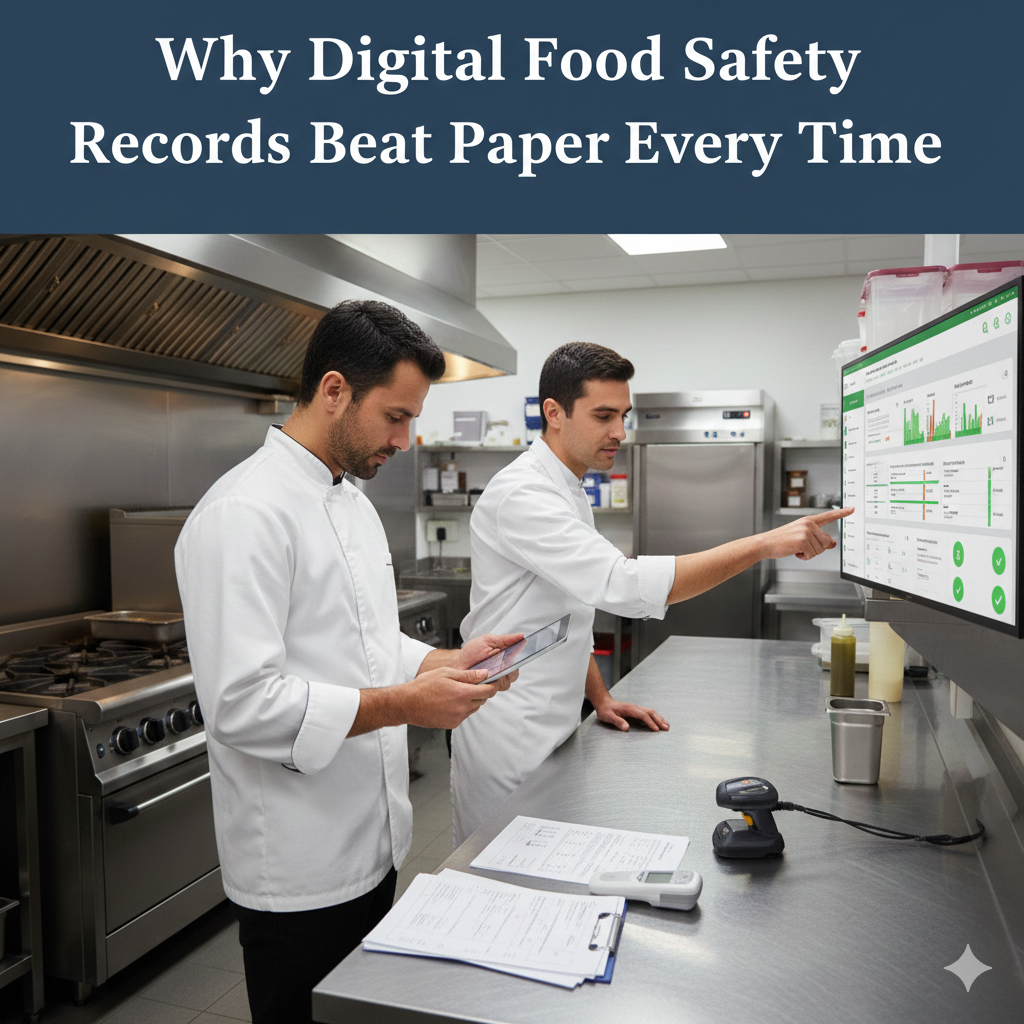
Your team logs in on a tablet in the kitchen. Temperature check done in 30 seconds. Cleaning checklist ticked off at the end of service. EHO visit code generated in 10 seconds.
**Paper records had their day. That day is done.***Ready to replace your paper log books? [Start your free CompliChef trial](https://portal.complichef.co.uk/signup.php) — no credit card required.*