The Moment a New Chef Walks In, Your Compliance Clock Starts
Hiring a new chef is exciting — fresh skills, new energy, and one less gap in the rota. But from a food safety perspective, it's also one of the highest-risk moments in your kitchen calendar. Until that chef has been properly inducted, assessed, and signed off, they're an unknown variable in a very controlled environment.
We've written before about how high staff turnover puts your food safety at risk — but turnover is only half the problem. The other half is what happens in those critical first days and weeks when a new team member is finding their feet. Get this wrong, and you're not just risking a poor hygiene inspection; you're risking a serious food safety incident.
Here's how to get it right.
Why Standard 'HR Onboarding' Isn't Enough in a Kitchen
Most hospitality businesses have some form of onboarding process — a contract, maybe a tour, a chat about the menu. That's fine for front-of-house. In the kitchen, it's nowhere near sufficient.
A new chef needs to understand your kitchen's specific procedures, not just generic food hygiene principles they may have learned years ago. They need to know:
- Your allergen management protocols and how you communicate them
- Your HACCP records and what they're expected to fill in
- Temperature monitoring schedules and your specific equipment
- Your cleaning rotas and chemical handling procedures
- Supplier intake procedures and date-labelling standards
- Who to report food safety concerns to, and how
Even an experienced chef with a Level 3 Food Hygiene certificate needs this briefing. Their previous kitchen did things their way. Yours does things your way.
Build a Kitchen-Specific Onboarding Checklist
A structured checklist is the backbone of compliant onboarding. It ensures nothing is left to memory, and it creates a documented audit trail that proves due diligence.
Day One Essentials
- Confirm food hygiene certificate is valid and on file
- Complete allergen awareness briefing (verbal + signed acknowledgement)
- Tour of kitchen, including fridge/freezer locations and labelling system
- Introduction to HACCP documentation and daily records
- Review of personal hygiene standards (uniform, jewellery policy, illness reporting)
- Emergency procedures — who to call, where the first aid kit is
First Week Tasks
- Supervised completion of temperature monitoring records
- Hands-on walkthrough of cleaning schedules
- Review of supplier delivery procedures and rejection criteria
- Introduction to your allergen matrix and menu documentation
- Sign-off on food safety policy and employee handbook
End of Trial Period
- Competency assessment — can they complete HACCP records accurately?
- Review of any incidents or near-misses during trial
- Confirmation that all training records are complete and stored
- Formal sign-off by Head Chef or Kitchen Manager
Paper vs Digital: The Handover Problem
One of the most common failure points in chef onboarding is the handover itself — specifically, what happens when a departing chef leaves and a new one arrives.
Paper-based systems create real vulnerability here. Training records get lost. Checklists go unsigned. The new chef inherits a folder of documents they don't fully understand, and nobody's quite sure what's been completed and what hasn't.
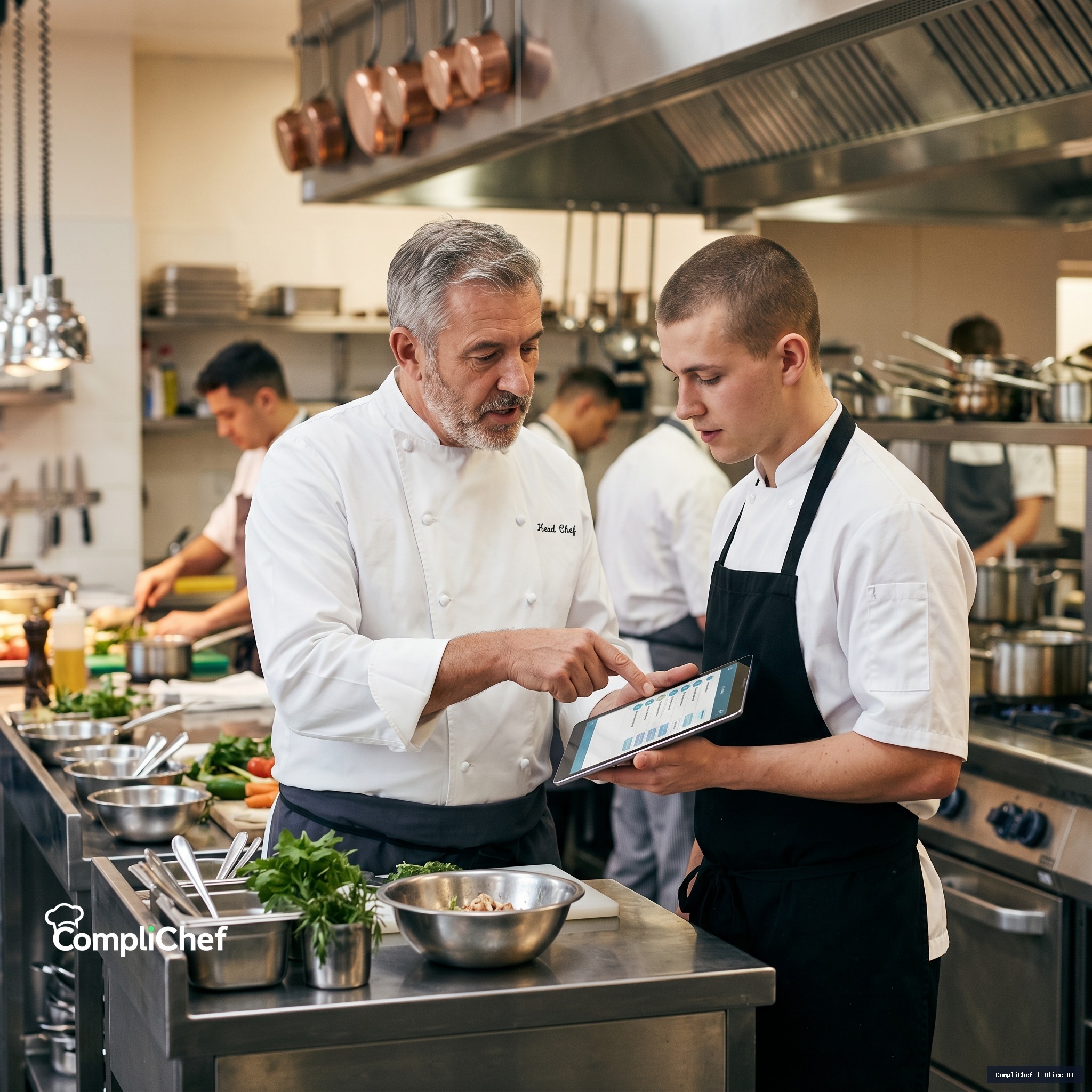
Digital systems change this completely. When your onboarding documentation, training records, and compliance tasks live in one platform, there's no ambiguity. Everything is timestamped, signed digitally, and visible to management in real time.
With CompliChef StaffPortal, you can:
- Assign onboarding tasks to a new team member before they even start their first shift
- Set required training modules they must complete and sign off digitally
- Track progress in real time from your manager dashboard
- Store certificates, allergen acknowledgements, and policy sign-offs securely in one place
- Get automatic alerts if a task is overdue or a certificate is about to expire
This means your Head Chef isn't chasing paperwork — they're cooking. And if an EHO walks through your door during that new chef's second week, you can demonstrate full compliance instantly.
Managing the Trial Period Safely
The trial period isn't just about deciding whether a chef fits your team — it's a formal compliance window. During this time, the chef should be operating under closer supervision, and their compliance behaviour should be actively monitored.
Practical trial period compliance tips:
- Don't leave them unsupervised with allergen-critical dishes until you've verified their understanding
- Spot-check their HACCP records for accuracy during the first two weeks
- Have a daily debrief — even five minutes to flag anything they're unsure about
- Document any concerns formally, even if minor, so there's a record if issues escalate
- Revisit the allergen briefing at the end of week one — retention is rarely 100% first time
If a chef is struggling with compliance tasks during their trial, address it directly and document the conversation. This protects both the business and the employee.
Training Records: Not Optional, Non-Negotiable
Under UK food safety law (Food Safety Act 1990 and Regulation (EC) 852/2004), businesses must demonstrate that food handlers are supervised, instructed, and trained in food hygiene. Training records are your evidence.
For each new chef, you should hold on file:
- Copy of their food hygiene certificate (and renewal dates)
- Signed allergen awareness acknowledgement
- Completed onboarding checklist with dates and signatures
- Any in-house training completed (cleaning procedures, HACCP, etc.)
- Notes from any competency assessments
CompliChef StaffPortal keeps all of this in one place, accessible at a moment's notice. No filing cabinets. No missing documents. No stress during inspections.
Make Compliance Part of Your Kitchen Culture
The best onboarding isn't just about paperwork — it's about signalling to your new chef, from day one, that food safety is taken seriously here. When they see digital records being completed diligently, when they receive a structured induction rather than being thrown in at the deep end, and when they're asked to sign off on training properly, they understand the standard.
That culture of compliance is what protects your customers, your rating, and your reputation — not just in the first week, but every service after it.
Ready to make chef onboarding seamless and fully compliant? Explore CompliChef StaffPortal and see how leading hospitality businesses are managing training records, inductions, and compliance tasks digitally.