The Paper Problem Every Kitchen Manager Knows
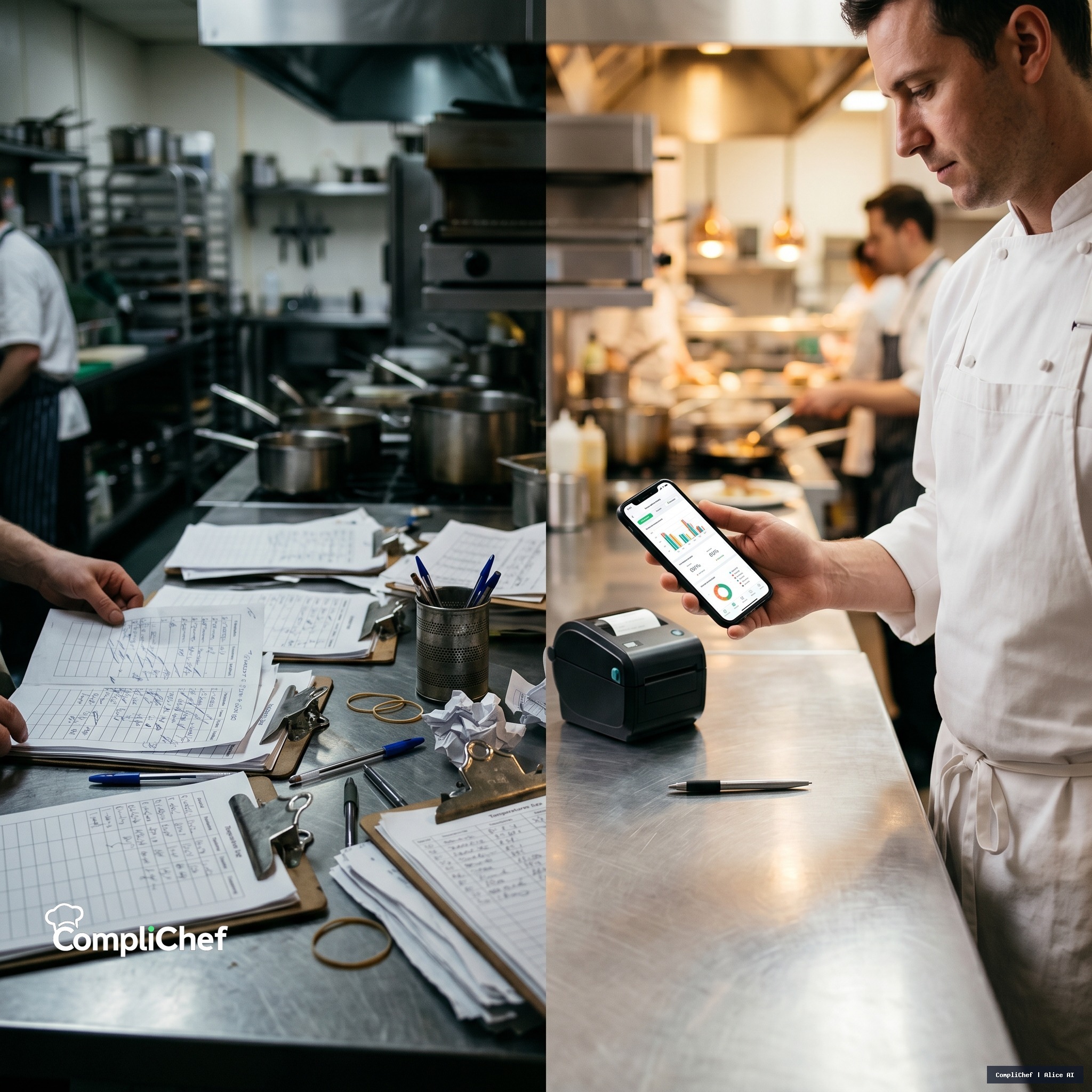
It's 7:45am. The morning rush is building. Your sous chef is hunting for last week's temperature log under a pile of clipboards, a sticky biro has run out mid-entry, and three rows on yesterday's fridge check sheet are suspiciously blank. Sound familiar?
For the vast majority of UK hospitality businesses, paper-based HACCP records remain the default. They're familiar, low-cost to set up, and require no training beyond handing someone a pen. But familiarity isn't the same as effectiveness — and in a Food Standards Agency inspection, a folder of incomplete, illegible, or missing paper records can be the difference between a five-star rating and a costly enforcement action.
Let's be honest about what paper HACCP logs actually cost you.
The Hidden Costs of Paper-Based Food Safety Records
Paper logs aren't free. Beyond the obvious cost of printing and filing, they carry a range of hidden operational and compliance risks that many kitchen managers underestimate.
Incomplete and Inaccurate Entries
Handwritten logs depend entirely on human discipline under pressure. During a busy service, temperature checks get skipped, entries get backdated, or columns get filled in from memory rather than measurement. These gaps don't just represent a hygiene risk — they represent a compliance liability. If something goes wrong and your records don't stack up, your defence collapses.
No Real-Time Visibility
With paper logs, there's no alert if your walk-in fridge crept above 8°C overnight. There's no notification if a member of staff forgot to complete the opening checks. You only discover problems when you physically review the paperwork — often too late.
The Admin Burden Is Significant
Across a busy kitchen, food safety paperwork can consume 30–60 minutes of management time per day when you factor in checking, chasing, filing, and retrieving records. Multiply that across a week, a month, a year — and you're looking at a substantial drain on your most expensive resource: management time.
Storage, Retrieval, and Audit Headaches
The Food Standards Agency recommends retaining HACCP records for a minimum of two years (longer for certain products). Paper records need physical storage, are vulnerable to damage or loss, and are genuinely difficult to retrieve quickly during an inspection. A digital system makes retrieval instant.
What Digital HACCP Records Actually Look Like in Practice
Switching to digital doesn't mean replacing your entire kitchen workflow overnight. The right platform slots into how your team already works — it just removes the paper.
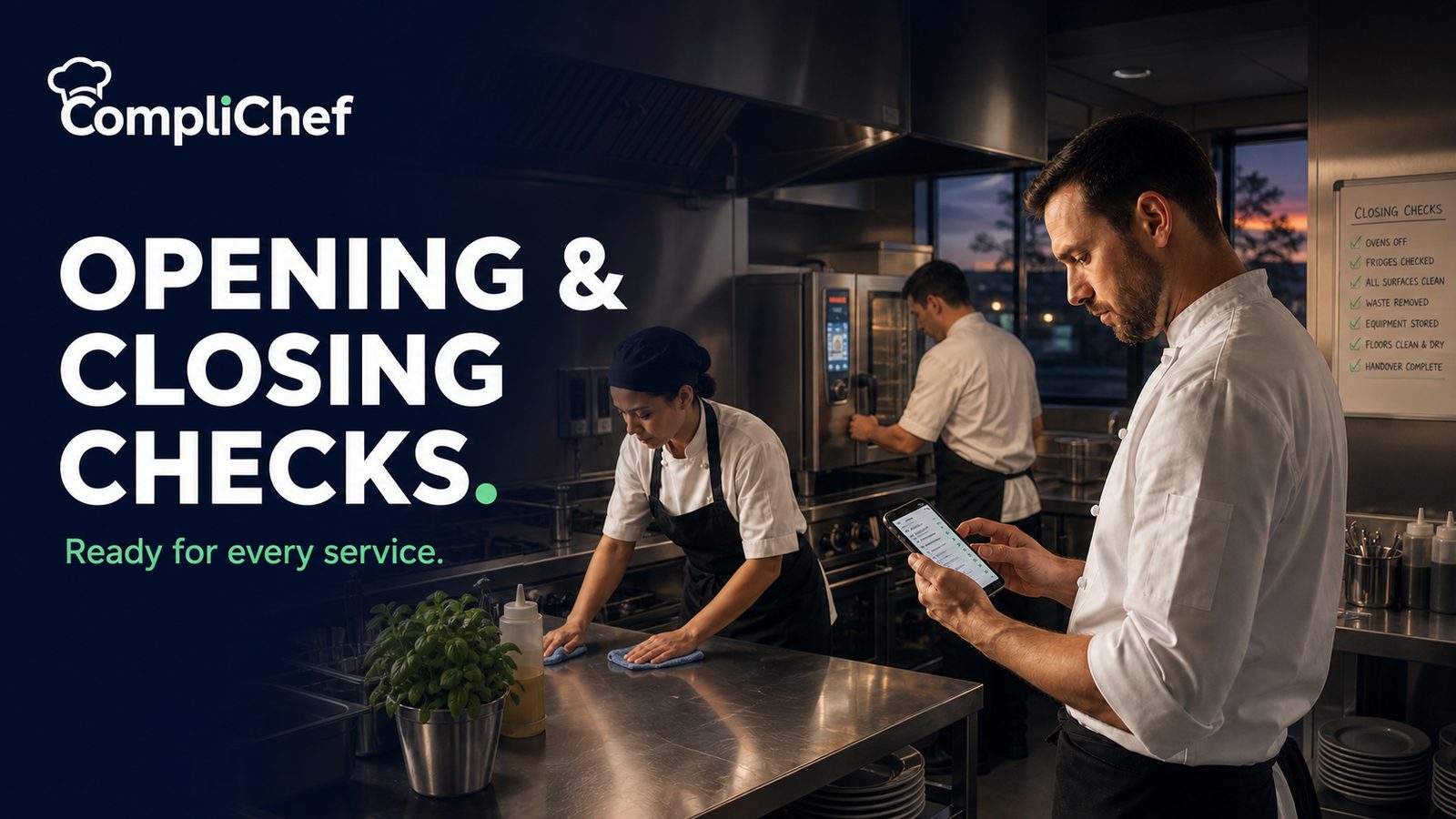
With CompliChef KitchenPortal, your team completes temperature logs, fridge checks, cooking records, and opening/closing checks directly on an iPhone. The dashboard is clean, intuitive, and fast — designed for people in whites, not desk workers.
Here's what that looks like day-to-day:
- Opening checks completed on the app in under two minutes, with prompts ensuring nothing is missed
- Temperature logs recorded with a tap — timestamped, signed, and stored automatically in the cloud
- Out-of-range alerts flagged immediately, so you can act before stock is compromised
- Label printing via a Sunmi printer integrated directly with the app — no separate device, no manual label-writing
- Audit-ready records accessible instantly, filterable by date, team member, or check type
No clipboards. No missing biros. No chasing staff for incomplete entries at the end of a shift.
What UK Food Safety Law Actually Requires
Under Regulation (EC) No 852/2004 (retained in UK law post-Brexit), food businesses are required to implement and maintain a food safety management system based on HACCP principles. Critically, the regulation requires that records be kept to demonstrate the system is working.
The good news? The law does not specify that records must be paper-based. Digital records are fully compliant — and in many respects, more defensible. A timestamped, cloud-stored digital log is significantly harder to dispute than a handwritten entry.
Local authority environmental health officers are increasingly familiar with and receptive to digital HACCP systems. Several EHOs have publicly noted that well-maintained digital records demonstrate a proactive approach to food safety — which can positively influence inspection outcomes.
Making the Switch: Practical Steps for Kitchen Managers
If you're considering moving away from paper logs, here's a straightforward approach:
- Audit your current paperwork — identify which logs you currently maintain and how consistently they're completed
- Map your critical control points — make sure your digital system covers every CCP in your HACCP plan
- Choose a platform built for kitchens — not a generic form builder, but purpose-built food safety software like CompliChef
- Run a parallel period — for the first two to four weeks, maintain both paper and digital records to build team confidence
- Train your team properly — digital adoption fails when staff aren't shown the why, not just the how
- Review and iterate — use the data your digital system generates to improve your processes, not just tick compliance boxes
The Bottom Line
Paper HACCP logs had their time. For a generation of kitchen managers, they were the only option — and countless businesses built safe, compliant operations on them. But in 2024, continuing to rely on handwritten records in a busy commercial kitchen is a choice that carries real operational and compliance risk.
Digital food safety records are faster, more reliable, more auditable, and — perhaps most importantly — they free your team to focus on cooking great food rather than chasing paperwork.
If your kitchen still looks like the left side of that split-screen image — clipboards, paper chaos, dim lighting, and the lingering dread of an EHO visit — it might be time to pick up your iPhone instead.
CompliChef KitchenPortal is built specifically for UK hospitality businesses. Request a free demo today and see what compliance looks like when it fits in your pocket.