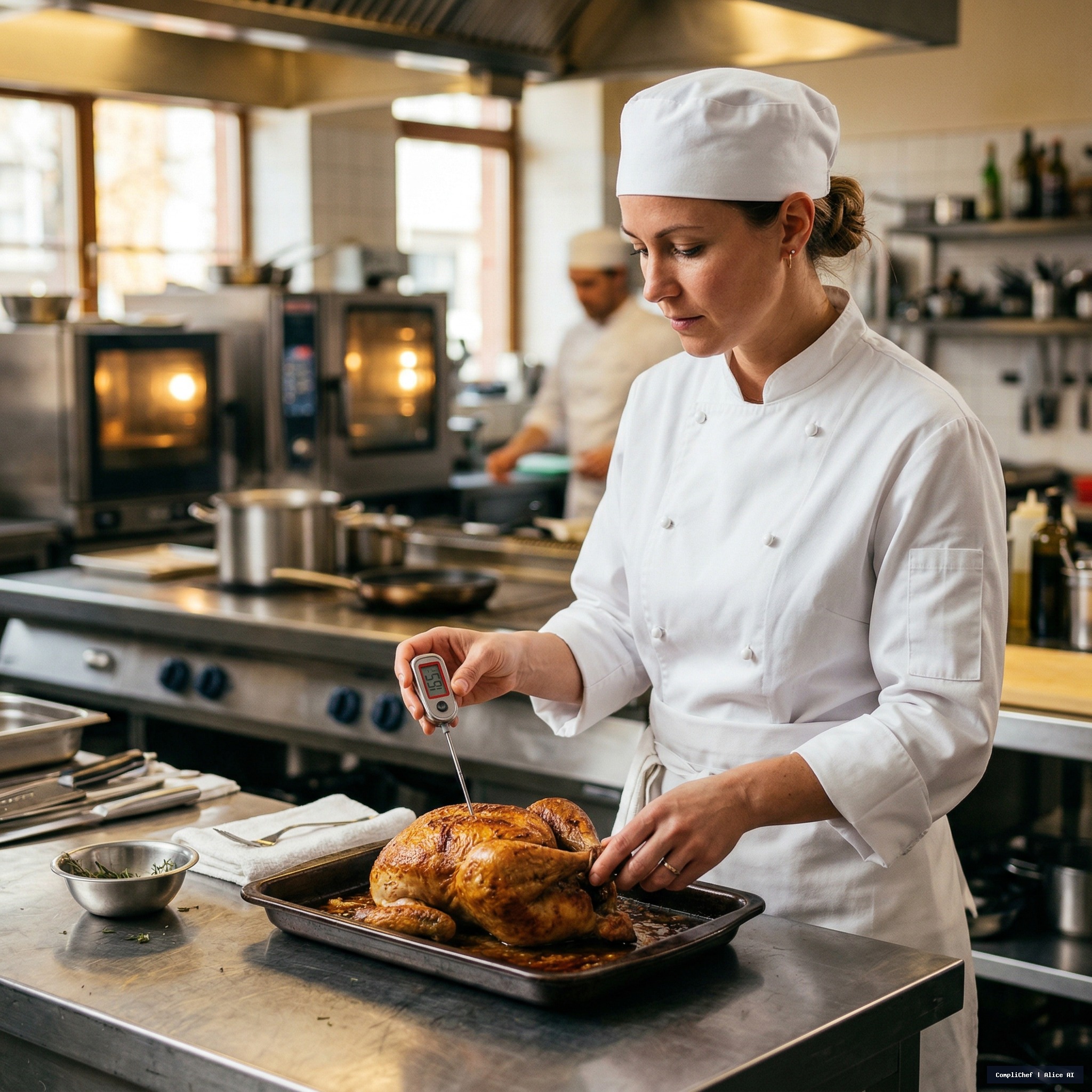
Why Food Temperature Monitoring Is Non-Negotiable
In any UK hospitality or catering business, controlling food temperatures is one of the most critical barriers between your kitchen and a foodborne illness outbreak. The Food Standards Agency (FSA) is unambiguous: temperature control is a legal requirement under Regulation (EC) No 852/2004 and the Food Safety and Hygiene (England) Regulations 2013.
Get it wrong, and the consequences are severe — from a failed hygiene inspection and reputational damage to enforcement action, fines, or even prosecution. More importantly, a customer could become seriously ill.
The good news? With the right systems in place, temperature monitoring doesn't have to be a burden. It can be efficient, accurate, and largely automated.
Understanding the Key Temperature Danger Zone
Before diving into systems and solutions, it's worth revisiting the science. Bacteria multiply most rapidly between 8°C and 63°C — commonly referred to as the temperature danger zone. Your goal is to keep high-risk foods outside this range as much as possible.
Here are the critical temperature benchmarks every UK kitchen should know:
- Chilled storage: 0°C to 5°C (ideally at or below 5°C)
- Frozen storage: -18°C or below
- Hot holding: 63°C or above
- Cooking (most foods): 75°C at the centre (or equivalent, e.g. 70°C for 2 minutes)
- Reheating: 75°C at the centre (82°C in Scotland)
- Cooling: From 60°C to below 8°C within 90 minutes
These aren't guidelines — they're the foundations of your HACCP (Hazard Analysis and Critical Control Points) plan.
The Risks of Inadequate Temperature Monitoring
Many food safety incidents aren't caused by a single catastrophic failure — they're the result of small, repeated lapses in temperature monitoring. Common problems include:
- Fridge or freezer failures going unnoticed until stock is already compromised
- Undercooking proteins such as poultry, minced beef, or pork
- Holding cooked foods at insufficient temperatures during service
- Inadequate cooling of batch-cooked dishes like soups, stews, or rice
- Gaps in records that make it impossible to demonstrate due diligence during an inspection
The last point is particularly important. Under the due diligence defence in UK food safety law, you must be able to show you took all reasonable precautions. Without temperature logs, that defence evaporates.
Practical Tips for Streamlining Temperature Logging
Many kitchens still rely on paper-based temperature logs — and while paper records are legally acceptable, they're vulnerable to being lost, illegible, or simply not completed. Here's how to tighten up your process, whether you're paper-based or moving towards digital:
1. Build Checks Into Your Routine
Temperature monitoring only works when it's habitual. Assign specific checks to specific roles and times — opening fridge checks, pre-service hot holding checks, and end-of-service cooling checks should all be timetabled into the kitchen's daily schedule.
2. Use Calibrated, Appropriate Probes
Not all thermometers are equal. Use a calibrated digital probe thermometer for core temperature checks, and ensure it's sanitised between uses with probe wipes or hot, soapy water. Infrared thermometers are useful for surface checks but should never be used to verify cooking or cooling temperatures at the core.
Calibrate your probes regularly — place in iced water (should read 0°C) or boiling water (should read 100°C at sea level) and record the results.
3. Standardise Your Log Sheets
Whether digital or paper, your logs should capture:
- Date and time of check
- Food item or equipment being checked
- Temperature recorded
- Corrective action taken (if any)
- Signature or initials of the team member completing the check
Keep records for a minimum of three months, though many environmental health officers recommend retaining at least 12 months of records.
4. Act Immediately on Out-of-Range Readings
A temperature log only has value if your team knows what to do when a reading falls outside acceptable limits. Document corrective actions clearly — whether that's re-cooking, discarding stock, or calling in a refrigeration engineer — and make sure all team members are trained on these protocols.
How Smart Kitchen Technology Is Changing the Game
For forward-thinking hospitality businesses, the era of manual temperature logs is giving way to intelligent, automated monitoring systems. This isn't just about convenience — it's about consistency, accuracy, and audit-ready compliance at all times.
Wireless Temperature Sensors
Wireless IoT (Internet of Things) sensors can be placed inside fridges, freezers, hot-holding units, and even probed into batch-cooked dishes. They continuously record temperatures and sync data to a cloud-based dashboard, eliminating the risk of missed checks or human error.
Key benefits include:
- 24/7 monitoring — including overnight and during closed periods
- Instant alerts via SMS or email when temperatures drift out of range
- Automatic data logging with tamper-proof timestamps
- Exportable records for environmental health inspections
Digital HACCP Platforms
Platforms like CompliChef integrate temperature logging into a broader digital compliance system. Your team can complete temperature checks on a tablet or smartphone, with prompts, corrective action workflows, and manager sign-off built in. Everything is stored securely and accessible instantly — no searching for a paper folder when an EHO arrives.
Connected Cooking Equipment
Some modern combi ovens, blast chillers, and sous vide units now offer data logging as a built-in feature, recording cooking times and temperatures automatically. When integrated with your compliance platform, this creates a seamless, evidence-based paper trail from raw ingredient to finished dish.
Building a Culture of Temperature Compliance
The best technology in the world won't deliver results if your team doesn't understand why temperature monitoring matters. Invest in regular food hygiene training, make temperature checks a point of professional pride, and lead by example.
When staff understand the real-world consequences of a temperature failure — a customer hospitalised with Salmonella, a zero-star hygiene rating, a business closure — routine checks stop feeling like a chore and start feeling like what they are: a fundamental duty of care.
Final Thoughts
Food safety temperature monitoring is one of the cornerstones of HACCP compliance and a legal obligation for every UK food business. Whether you're managing a small café or a multi-site restaurant group, the principles are the same: monitor consistently, log accurately, act on deviations, and keep your records in order.
Smarter tools make all of this easier than ever. If you're still relying on clipboards and biro, now is the time to explore what a digital compliance platform could do for your kitchen — and your peace of mind.
*Want to simplify temperature monitoring across your entire operation? Explore how CompliChef can help.*